THE HERMETIC TEMPLE
A reading room for foundational Hermetic texts attributed to Hermes Trismegistus. Open to all. Free to: read, listen & download
The Reading Room
A small collection of articles to help you approach Hermes and the texts with clarity.
Who Hermes Trismegistus Is and Isn’t
Hermes Trismegistus is best understood as a revered teaching-voice: a wise name carrying a stream of ancient spiritual philosophy that turns the mind toward the Good and calls the soul back toward the Father. This piece explains what “Hermes” is in the tradition—and what he isn’t—so you can read with reverence and clear understanding.
What The Corpus Hermeticum Actually Is
The Corpus Hermeticum is a collected body of spiritual dialogues attributed to Hermes Trismegistus. It isn’t a single book by a single author, but a tradition of texts aimed at inner awakening, purified perception, and return to what is highest. This article explains what it is, what it’s for, and how to approach it well.
The Emerald Tablet: Why It’s So Short
The Emerald Tablet is famously brief—more seed than system. Its power is in concentration: symbolic lines that unfold through contemplation and lived understanding rather than quick explanation. This article explores why it’s so short, what that brevity is meant to do, and how to read it without flattening it.
The Kybalion: Useful, Modern, Not Ancient
The Kybalion can be genuinely useful, but it isn’t an ancient Hermetic text. It’s a modern work with a modern voice, best read as an interpretation rather than a source. This article places it honestly, shows what it can offer, and explains how to keep your foundations clear if your aim is a path back to the Father.
Gnosis: Knowing Without Belief
Gnosis is not strong opinion—it’s inward knowing: recognition that grows through sincerity, purification, and awakening. It can be called “knowing without belief” because it moves beyond borrowed certainty into lived truth. This article clarifies what gnosis means in a grounded way, without exaggeration or emotional promises.
“As Above, So Below”
“As above, so below” is best understood as correspondence, not a catchphrase. It points to a coherent order in reality and a call to integrity: that the lower can reflect the higher when life is aligned with the Good. This article explains the meaning without hype, keeping it reverent, practical, and clear.
Why “Hidden Knowledge” Usually Isn’t
“Hidden knowledge” is often marketed as a shortcut, but most of it isn’t truly hidden—just repackaged, fragmented, or overclaimed. Real wisdom tends to be quieter and harder won, requiring attention and inner change rather than secrecy. This article explains the difference, so you can seek depth without being pulled by hype.
What Changes When You Get This Right
A reflection on what changes when the soul stops scattering—when truth becomes lived, not discussed, and the heart begins to turn home.
Library
Hermetic writings are traditionally attributed to Hermes Trismegistus — a syncretic figure blending the Greek god Hermes with the Egyptian god Thoth, representing wisdom, writing, and hidden knowledge.This site focuses on three texts commonly associated with the Hermetic tradition, though they differ significantly in origin, age, and historical status.
Corpus Hermeticum
A collection of mainly Greek philosophical dialogues dating from the 2nd–3rd centuries CE (later transmitted and translated in Latin). These texts explore the nature of the Divine, cosmology, the soul, and the path to gnosis (direct spiritual knowledge). They represent the core of the ancient Hermetic tradition.
Emerald Tablet
A brief, enigmatic text first appearing in Arabic sources around the 8th–9th century CE, later translated into Latin. Its cryptic phrases — especially “as above, so below” — became foundational to medieval and Renaissance alchemy and esoteric philosophy, symbolizing the unity of microcosm and macrocosm.
The Kybalion
A modern text published anonymously in 1908 by the “Three Initiates,” presenting seven “Hermetic Principles.” It’s widely used as an introduction, but it isn’t part of the historical Hermetic corpus and draws chiefly from New Thought and early 20th-century metaphysical philosophy, not ancient Hermetic sources.
Free to: read, listen or download below.
Corpus Hermeticum
A collection of dialogues exploring mind, reality, and self-knowledge.
Read for clarity, not belief. Take your time.
The Emerald Tablet
A short symbolic text attributed to Hermes Trismegistus.
Dense, metaphorical, and open to interpretation.
Read slowly. Meaning emerges through reflection, not explanation.
The Kybalion
A modern Hermetic-inspired work first published in 1908.
Influential, but interpretive rather than historical.
Best approached as a psychological framework, not an ancient authority.
Support
Everything here is free and open.If you want to support the project, click the donate button below, it is voluntary only — a gesture of gratitude, never a requirement.
Who Hermes Trismegistus Is (and Isn’t)
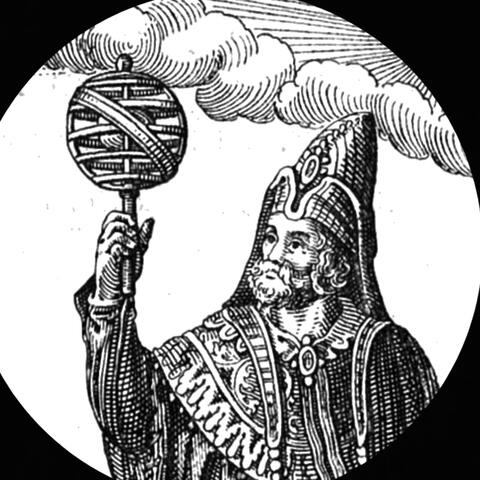
Hermes Trismegistus is best understood as a revered teaching-voice: a wise name used to carry a stream of ancient spiritual philosophy that turns the mind toward God, purifies the heart, and calls the soul back toward the One—the Father. If you approach the tradition with reverence and clear thinking, it offers something rare: a sober path of inner awakening without theatricality.
The phrase “Hermes Trismegistus” means “Hermes the Thrice-Great.” It points less to a biography and more to an honour: a figure held to embody fullness of wisdom. In the writings associated with Hermes, the voice is that of a teacher guiding students into a deeper understanding of the Divine, the cosmos, and the human soul. The aim is not to entertain curiosity, but to reorient a person toward what is highest and most true.
Hermes Trismegistus is also a meeting point of worlds. Historically, the figure blends Greek Hermes and Egyptian Thoth—messenger and guide, scribe and keeper of sacred knowledge. In the cultural life of Hellenistic Egypt, traditions crossed and language blended. Hermes becomes a name that can speak across worlds, not as a novelty, but as an attempt to point to one reality with more than one tongue.
In the Hermetic texts, the centre is often Nous (the higher Mind): not cleverness, but a purified capacity to recognise truth. The writings repeatedly return to the same movement: the soul forgets what is real, becomes scattered in lower concerns, then awakens through inner clarification and turns back toward the Good. This is why the Hermetic current has endured. It doesn’t just offer ideas; it calls for a change in the reader.
What Hermes Trismegistus isn’t is just as important, and saying so doesn’t diminish the tradition. Hermes is not best treated as a single, provable historical author of every text attributed to him. The Hermetic writings are better understood as a tradition—multiple works, composed across time, speaking in a shared spiritual register. That doesn’t make the teachings empty. It simply places them where they belong: as wisdom literature to be received with both reverence and honesty.
Hermes also isn’t a shortcut around the inner work. Classical Hermetic spirituality is demanding in a quiet way. It expects a person to become more truthful, more disciplined, more inwardly ordered. It is concerned with the formation of the soul, not the decoration of the mind.
If you want one simple line that stays true without flattening the mystery, it’s this: Hermes Trismegistus is the honoured teacher-name of a spiritual tradition that blends Greek and Egyptian wisdom and calls the soul toward inner awakening and return to the Father through love of the Good.
What the Corpus Hermeticum Actually Is
The Corpus Hermeticum is a collected body of spiritual-philosophical writings attributed to Hermes Trismegistus. It is not one single book written by one hand in one place. It is a gathering of shorter works—often dialogues—preserved through centuries and received as part of the Hermetic tradition. Its strength is not in being a tidy system, but in carrying a consistent spiritual direction: toward God, toward awakening, toward the purification of mind.
Most of the texts read as instruction. Hermes speaks to students (often Tat) about the nature of the Divine, the order of the cosmos, and the condition of the human soul. The writing can be contemplative, even visionary, but the intent is practical in the deepest sense: to make the reader more capable of truth. The Corpus is less interested in giving you opinions than in forming your perception.
A helpful way to understand the word “corpus” is simply “body.” This is a body of writings. And like a body, it has organs that work together. The themes return repeatedly: the Good as the highest reality; the human being as more than appetite and fear; the higher Mind (Nous) as the faculty that can recognise what is real; and the possibility of return—awakening from forgetfulness into clarity.
What the Corpus Hermeticum is not is a technical handbook. There are “technical” Hermetic materials in the wider tradition—texts linked to astrology, alchemy, medicine, and older sciences—but the Corpus itself is primarily spiritual and philosophical. It speaks about transformation, not procedures. It aims at inner alignment, not outer display.
The right way to read it is to treat it as a slow text. It isn’t written for skimming. It’s written for returning. A passage often lands best when you let it sit, then ask what it demands of your life. If the teaching is real, it should tighten your honesty, deepen your humility, and make you steadier. It should move you toward the Good in a way you can recognise in your choices, not just in your vocabulary.
In a world trained to consume, the Corpus trains a different posture: attention, sincerity, moral seriousness, and reverence. It assumes that the soul cannot see clearly while it is divided, indulgent, or dishonest. And it offers not a new identity, but a direction: a return toward the Father through truth and inner awakening.
The Emerald Tablet: Why It’s So Short
The Emerald Tablet is short because it isn’t trying to explain everything. It is trying to point. It’s a seed-text: compact, symbolic, and deliberately dense, so that a few lines can unfold through contemplation and lived understanding. Its brevity isn’t a weakness. It is part of its function.
A short sacred text works differently from a long one. A long work can build arguments, clarify terms, and guide a reader step by step. A short text can carry meaning in concentrated form, demanding attention rather than speed. The Emerald Tablet doesn’t reward rushing. It rewards returning.
Its language is famously layered. It speaks in correspondences: the relation between the higher and the lower, between principle and expression, between what is unseen and what is seen. This is why it has travelled so far through history. It can be read in more than one register: spiritual, philosophical, and in later periods, alchemical. Its reach is wide because it is compact enough to be carried inward.
There are also practical reasons a short text survives. Brief statements are easier to memorise, copy, translate, and transmit. They can move through centuries more easily than long treatises. The Tablet’s size helped it endure, and its symbolic density helped it remain meaningful in different hands and times.
But the deeper reason for its shortness is spiritual. The highest truths are not always improved by expansion. At a certain level, the issue is not missing information. The issue is the condition of the reader. A person can read a thousand pages and remain unchanged. A person can sit with one line and become more truthful.
In that sense, the Tablet’s brevity quietly insists on a principle: understanding is not only an act of the mind, but of the soul. When the soul becomes more sincere and more ordered, the text opens. When the soul stays restless and hungry for novelty, the text stays flat.
So the Emerald Tablet is short because it is meant to be carried like a compass, not consumed like content. It doesn’t offer a spectacle. It offers a direction—toward coherence, toward truth, toward a reality that is one, and toward the Father as the highest measure of the Good.
The Kybalion: Useful, Modern, Not Ancient
The Kybalion can be useful. It is clear, structured, and easy to remember. For some readers it provides a workable framework for thinking about mind, pattern, cause, and change. But it is not an ancient Hermetic text. It is a modern work with a modern voice, and it should be read honestly as such.
This doesn’t require hostility. You don’t have to attack a book to place it correctly. The simplest truth is that The Kybalion speaks in a style that belongs to a later era. Its tone and method resemble modern metaphysical teaching: compressed principles, practical emphasis, and a certain mental-technical framing of reality. That can help a reader organise their thoughts. It just isn’t the same thing as the classical Hermetic writings.
The classical texts—such as the Corpus Hermeticum and the Asclepius—tend to be more devotional and contemplative. They speak about awakening, purification, the higher Mind (Nous), and the soul’s return to the Good. They are less like a system and more like a path. They aim at the formation of the reader, not just the instruction of the intellect.
So where does The Kybalion fit? Best as an interpretation—Hermetic-inspired rather than Hermetic-original. It can serve as a stepping stone for some people. But it shouldn’t be used as a replacement for the classical sources if what you want is the original spiritual tone of the tradition.
There is also a gentle caution worth keeping: modern metaphysics can tilt toward a mind-only spirituality, where reality becomes something you “manage” by thought and technique. The more classical spiritual current is stricter and steadier. It emphasises humility, ethical formation, and inner purification as conditions for clear sight. In other words, it is less about mastery and more about alignment with the Good.
Gnosis: Knowing Without Belief
Gnosis is not having a strong opinion about God. It is inward knowing: recognition that comes through awakening, purification, and direct contact with what is true. In that sense it can be described as “knowing without belief,” not because belief is evil, but because the person is no longer relying on second-hand certainty. The truth becomes lived and integrated.
This needs careful wording, because people can misunderstand it. “Knowing without belief” does not mean refusing faith or mocking trust. It means that spiritual truth is no longer held only as a concept. It becomes real enough to shape choices, character, and perception. A person moves from repeating ideas to living in a changed orientation.
The Hermetic tradition often connects this to Nous—the higher Mind. Not intellect as cleverness, but a clarified faculty of perception. The claim is not that information saves. The claim is that the soul can awaken, and that awakening changes what the mind can recognise. In that frame, ignorance is not merely lack of data; it is forgetfulness, disorder, and inner division. Gnosis is remembrance and re-ordering.
Because this is inward, it cannot be packaged into a universal emotional prediction. People experience awakening differently. Some feel peace; some feel grief; some feel both. What matters is not the mood, but the movement: a greater love of truth, a stronger conscience, a steadier mind, a more sincere life. Gnosis is known by fruit over time, not by intensity in the moment.
Gnosis also has a moral weight. It does not flatter the ego. If a person becomes proud, contemptuous, or addicted to feeling “special,” they may have gained ideas but not gnosis. Real knowing tends to simplify a person. It makes them less performative and more honest. It makes them harder to manipulate and more willing to face what is real.
If your aim is the Father, gnosis is best understood as intimacy with the Good made practical. Not a badge, not a club, not a claim of superiority—just the soul becoming capable of truth and returning to what is highest.
“As Above, So Below”
“As above, so below” is best understood as a principle of correspondence: reality is coherent, the higher order is reflected in the lower, and the visible world can teach the mind about the invisible—if the mind is steady and sincere. Without slogans, it becomes a sober claim about meaning rather than a dramatic statement about power.
The key is correspondence, not sameness. The lower can reflect the higher without being equal to it. A reflection is real, but it is not the source. In a reverent reading, the created world points beyond itself. It carries signatures of order, pattern, and intelligibility. That does not reduce the Father into nature, and it does not turn nature into an idol. It simply treats creation as meaningful rather than random.
This principle is easiest to misunderstand when it gets turned into a shortcut phrase. People can hear it as permission to collapse everything into one flat idea: “everything is everything.” But the more careful sense is directional. The “above” is measure and source; the “below” is expression. When the lower is ordered, it becomes a clearer mirror. When it is disordered, the mirror distorts.
This is not only about nature. It’s about the person. Your inner life shapes what you can perceive. A mind driven by fear or vanity doesn’t see clearly. A mind becoming more truthful tends to become more discerning. In that way, correspondence becomes a moral and spiritual demand: if you claim to honour the highest, your daily life should begin to reflect it.
So the phrase isn’t primarily a cosmic riddle. It’s a call to integrity. It asks whether your inner and outer life belong to the same truth. It asks whether your words match your motives, whether your motives match your actions, and whether your actions are worthy of what you claim to serve.
Read reverently, “as above, so below” becomes simple: the world is coherent; the soul is a mirror; and the path is to become truthful enough that the mirror reflects the Good more cleanly—until the person is quietly reoriented toward the Father.
Why “Hidden Knowledge” Usually Isn’t
“Hidden knowledge” is attractive because it promises a shortcut. It suggests that what you need is not patience, integrity, or transformation, but a missing piece of information. Find the piece and you’ll be safe, powerful, and certain. That promise is emotionally compelling, but it usually points in the wrong direction.
Most of what gets marketed as hidden knowledge is not truly hidden. It’s often ordinary insight wrapped in mystery, fragments pulled out of context, or private experience presented as universal law. The packaging creates intensity. The content often doesn’t create maturity.
There is a difference between “hidden” and “hard.” Some truths remain closed to a hurried or performative reader, not because they’re locked away, but because understanding has conditions. Certain writings only open when a person becomes more sincere, more attentive, more humble, and less hungry for status. In that sense, the “secret” is not a fact withheld from you. The secret is the inner state required to recognise what’s already there.
The clearest warning sign is when the pursuit itself changes your character in the wrong direction. If the hunger for secrets makes you restless, superior, cynical, or addicted to novelty, it isn’t leading you home. A genuine path tends to simplify a person. It strengthens conscience. It makes someone more honest, more steady, more merciful, and less easily manipulated by hype.
In the more serious spiritual traditions, the highest knowledge is not a trick. It is alignment with the Good. It is the mind becoming clearer and the heart becoming cleaner. What’s “hidden” is often simply what cannot be grasped by a divided soul. The door isn’t locked from the outside. The door is the person.
So the mature approach is not to despise mystery, but to refuse the counterfeit of mystery. Let truth be slow. Let depth take time. If your aim is the Father, you don’t need secret leverage. You need sincerity, patience, and the steady willingness to become true.
What Changes When You Get This Right
At first the change looks like nothing.
A little less inner noise. A little more stillness you didn’t manufacture. A small refusal to escape yourself.
Then you notice something deeper: you are not as many as you thought. The soul was meant to be one. But it has been pulled into pieces—by fear, by craving, by the need to be seen, by the habit of protecting what cannot be blessed.
When the turning becomes sincere, what is scattered starts to gather.
You begin to feel the difference between what lifts you and what merely excites you. Between what is clean and what is mixed. Between the voice that tells the truth and the voice that negotiates.
And the higher begins to descend—not as drama, but as conduct. A truer tongue. A steadier gaze. A quieter strength in the face of loss. A growing refusal to decorate yourself.
“Return to the Father” becomes less like a thought and more like a homeward pull. You don’t understand everything. You just stop pretending you are the centre.
The change is not that life becomes painless.
It is that the soul becomes simpler.
And because it is simpler, it becomes harder to steal from.